What iSmart Glass is
iSmart Glass — switchable or smart glass — is a glazing technology that lets a glass panel alternate between opaque and transparent states on demand. Applying an electric current rearranges the liquid crystal molecules embedded in the panel, and that is the whole mechanism. Control is a switch, a schedule or an automated sensor.
Privacy and collaboration stop competing
Finding the balance between privacy and transparency is the central difficulty in an open-concept workplace. Blinds and drapes are the default answer and they are a poor one: they look dated, they disrupt the clean line of a modern interior, and they need operating by hand, which means in practice they are left in one position for months.
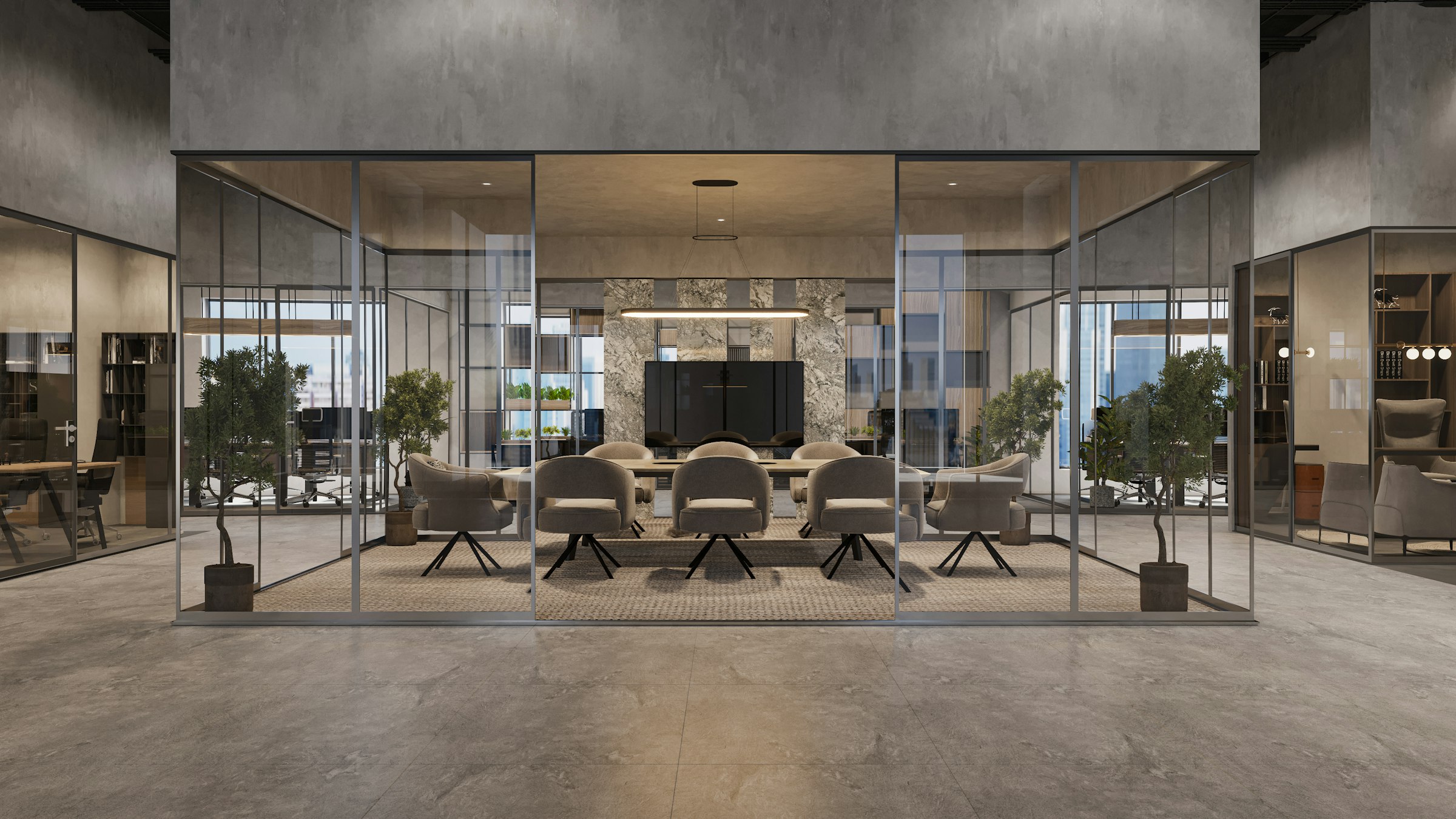
Switchable glazing gives executive offices, meeting rooms and collaboration areas privacy that appears only when it is needed. Glass walls become opaque at a switch for a presentation, a board meeting or a private conversation, then return to clear — so the room contributes to the open, connected floor for the other 95% of the week.
Daylight without the glare
Access to natural light lowers energy costs, improves mood and increases productivity — none of which is controversial. The difficulty is that the same daylight produces glare on screens and heat on the elevation.
Switchable glazing lets occupants take the daylight and moderate the discomfort, adjusting opacity rather than choosing between a bright uncomfortable room and a dark comfortable one. That dynamic control also cuts the hours artificial lighting has to run.
Where the energy saving comes from
The saving arrives from two directions at once. In its opaque state the glazing filters heat and UV, keeping interior temperatures lower and reducing the demand on air conditioning. In its clear state it admits daylight, reducing lighting load. Because the state changes through the day, neither benefit is bought at the permanent cost of the other — which is exactly what a fixed tint or a permanent blind does.
It supports how offices actually work now
Agile working means a floor plate has to be reconfigured continuously rather than at refit. Switchable glazing lets a space become a private one-to-one room and then an open team area within the same hour, without moving anything physical. For an organisation that cannot predict what its floor will need to be in two years, that is the point.
Comfort, focus and the things people notice
The work environment has a direct effect on productivity and wellbeing. Better control of natural light improves focus and reduces screen glare. Laminated switchable glass also contributes acoustic separation, which limits distraction on a busy floor. Visual comfort, privacy and noise reduction together are what people actually mean when they say a workplace “works”.
And it reads as considered
Beyond the practical case, switchable glazing gives corporate interiors a clean, minimal appearance that a blind on a glass wall never will. In executive suites, lobbies and meeting rooms the surface stays uniform whether it is clear or private — which is what makes it look designed rather than solved.