How the office got here
The switch from closed cubicles to open-plan offices was driven by a real goal: communication and collaboration between people who had been walled off from each other. It delivered that. It also removed every physical barrier, and with them went acoustic separation, visual separation and any sense that a conversation could be had without an audience.
For staff who handle confidential work — HR, legal, finance, anyone dealing with personal data — that is not a comfort issue. It is an operational one.
Distraction is the measurable cost
Open plans produce constant movement, conversation and phone calls. Employees find it hard to hold attention on work that requires it. Visual distraction does the same damage as noise: people passing, unscheduled meetings happening nearby, the general awareness of being observed.
Partition screens, privacy panels and frosted or switchable glazing create defined personal work zones that cut both. When people can concentrate, work is finished faster and to a higher standard — which is the whole argument in one sentence.
The wellbeing case is not soft
A lack of privacy raises workplace stress. Feeling continuously observed, or having nowhere quiet to go, affects mental health and eventually productivity along with it. Being constantly surrounded by noise with no personal space raises stress levels and, over time, contributes to burnout.
Privacy also supports creative work specifically. People generally need quiet and solitude to generate ideas or work through a difficult problem. A floor with nowhere to do that will produce less of it.
Confidentiality is a legal requirement in some sectors
In law, banking and healthcare, handling private information is routine and maintaining confidentiality is a legal and ethical obligation, not a preference. If there is nowhere private to have the conversation, staff will delay having it — or have it somewhere unsuitable.
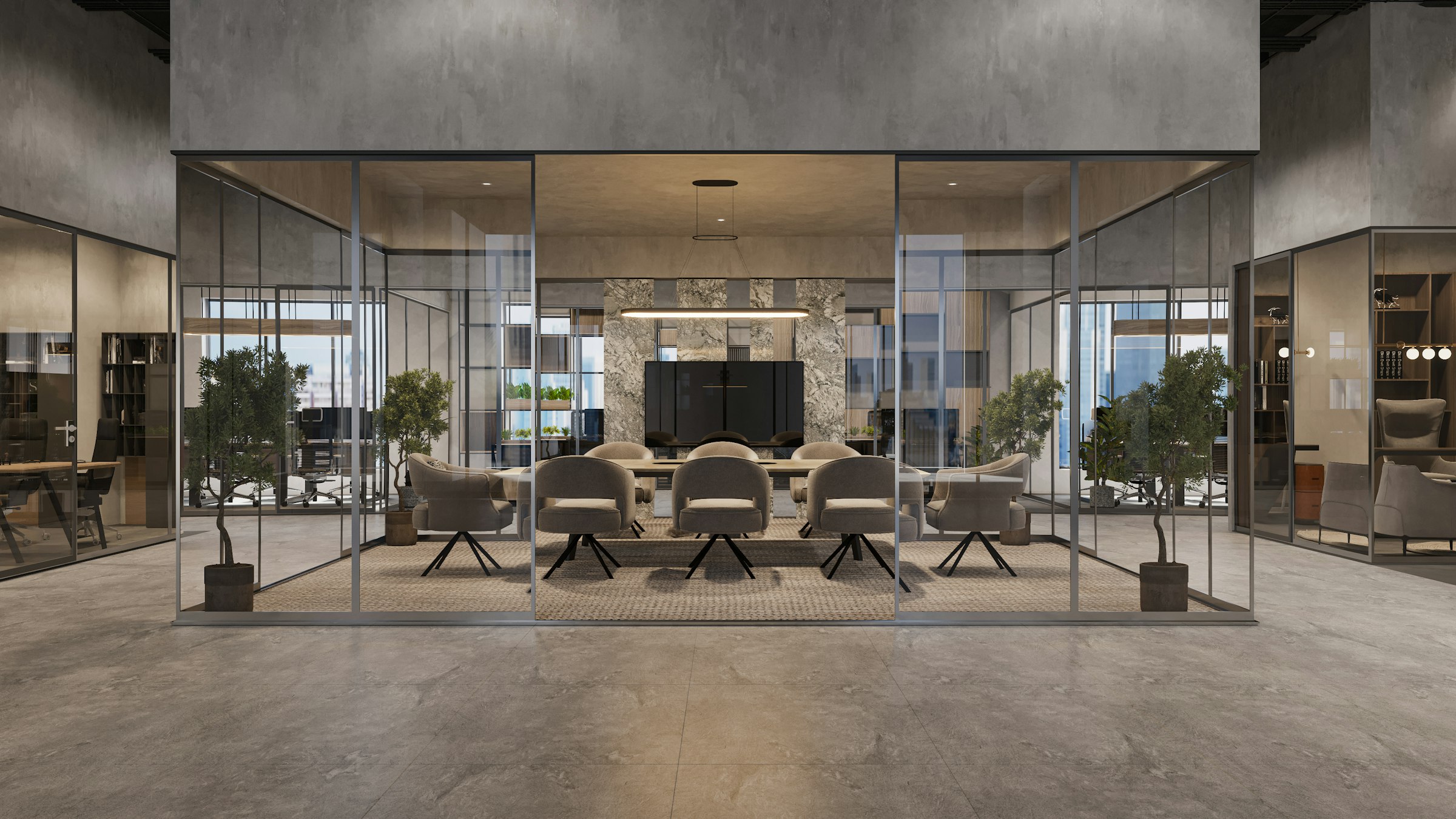
Acoustic barriers, private meeting rooms and switchable glazing let those conversations happen in a controlled setting rather than in a corner of the floor.
Satisfaction and retention follow
Employees who feel their needs are met stay engaged. Privacy provision gives people a sense of control over their working environment, and providing it signals that the organisation takes their working conditions seriously. That shows up in retention, which is expensive to lose.
What to actually do about it
- Give the floor a small number of genuinely private rooms. Not many — a small number that are actually private beats a large number that are technically enclosed and acoustically transparent.
- Use switchable glazing on those rooms rather than blinds. A room with the blind permanently down has been removed from the floor plan; a switchable room has not.
- Specify for the conversation, not the room. Ask what must not be overheard, and specify the acoustic make-up against that.
- Keep the daylight. Solving privacy by making rooms solid trades one problem for another, and the second one is harder to reverse.