Privacy on demand
Switchable PDLC technology lets a glazed partition alternate between transparent and opaque states. In the opaque state it protects sensitive meetings — salary discussions, board papers, client negotiations — while leaving the workspace arrangement of an open-plan floor untouched.
That matters because the alternative is structural. Without switchable glazing, an organisation that needs a confidential room either builds a solid one or accepts a blind that stays down permanently. Both remove the room from the open plan the building was designed around.
Transparency for presentations and collaboration
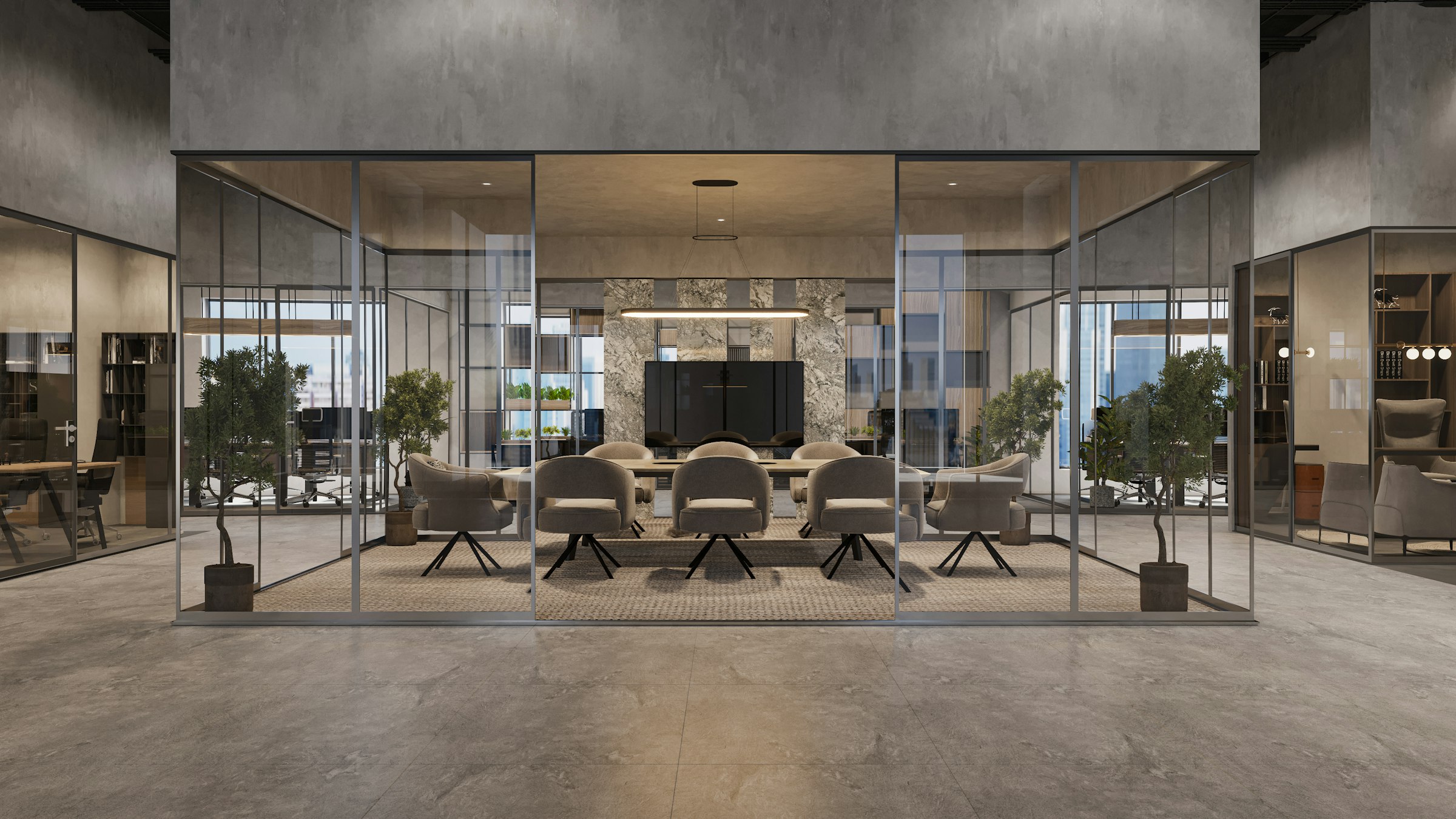
In the transparent state the same partition does the opposite job. Natural light passes through to the core of the floor plate, teams can see and be seen, and the space keeps the clean, contemporary appearance that glazed interiors are specified for in the first place.
Enhancing the office environment
Energy efficiency follows from the same mechanism. Controlling heat and light by adjusting opacity reduces cooling and lighting demand, and reducing glare on screens is a direct improvement in working conditions for anyone who spends the day at a display.
Takeaway
The value of switchable PDLC glass in an office is not that it is a better blind. It is that it removes a decision that used to be permanent — whether a given line in the floor plate is open or closed — and hands it back to the people using the room, hour by hour.